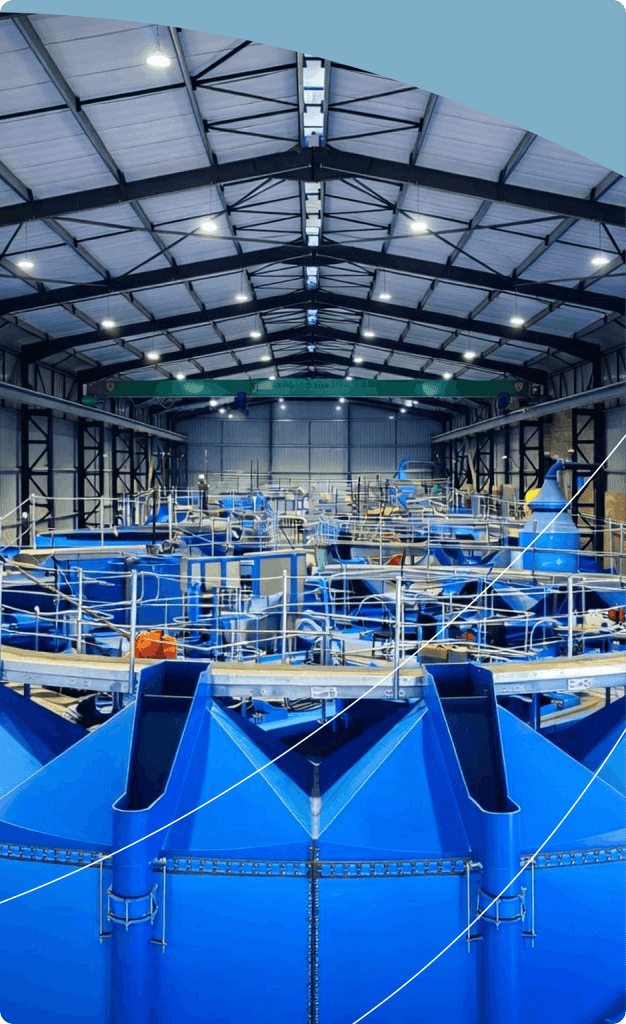
POWEER GENERATION
Securing water resilience to protect generation and grid stability.
Power generation depends on water. Cooling systems, boiler feedwater, emissions control, and auxiliary processes all require large volumes of stable-quality water to operate reliably. Most power stations sit in water-stressed regions, where supply variability and infrastructure constraints directly threaten uptime.
Kalabas provides power generators with predictable, scalable water treatment that supports continuous operation — without the long commissioning timelines and energy intensity of traditional civil-heavy solutions.
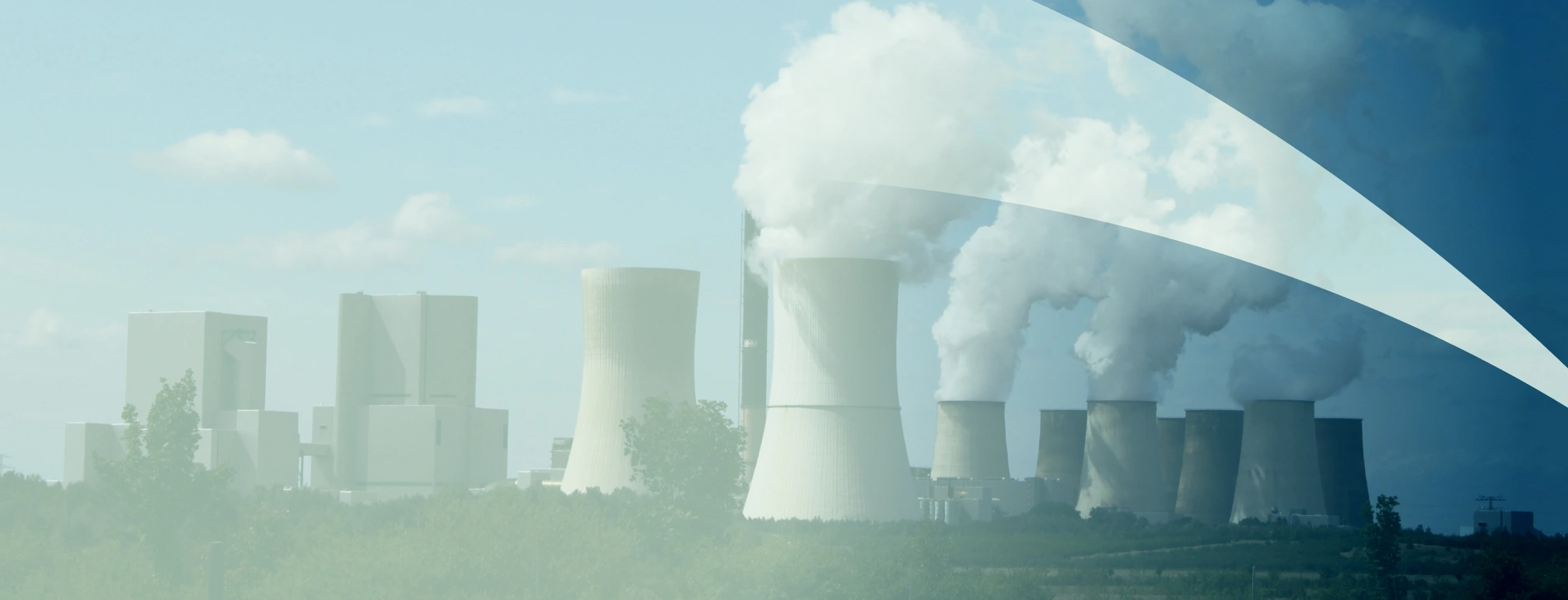
Utility-scale output
Regional-scale capacity through modular deployment.
No derating under variability
Consistent treatment despite extreme turbidity swings.
Continuous supply
No backwash downtime and built-in redundancy protect generation uptime.
Asset life extension
Cleaner water reduces corrosion, scaling, and unplanned maintenance.
<50 kW per ML
Low-energy treatment aligned with power sector efficiency requirements.
Accelerated deployment
Water infrastructure delivered on power project timelines.
Resilient water treatment to counter energy instability
Water quality variability has a direct impact on turbine efficiency, boiler lifespan, and cooling system performance. Elevated turbidity, suspended solids, and sediment loads accelerate fouling, corrosion, and scale formation, driving maintenance costs and unplanned outages.
The generation risk
Power generation cannot tolerate interruptions. Cooling water failures translate immediately into reduced output or shutdowns. Conventional water treatment plants take years to design and commission, creating misalignment between water infrastructure delivery and power project timelines.
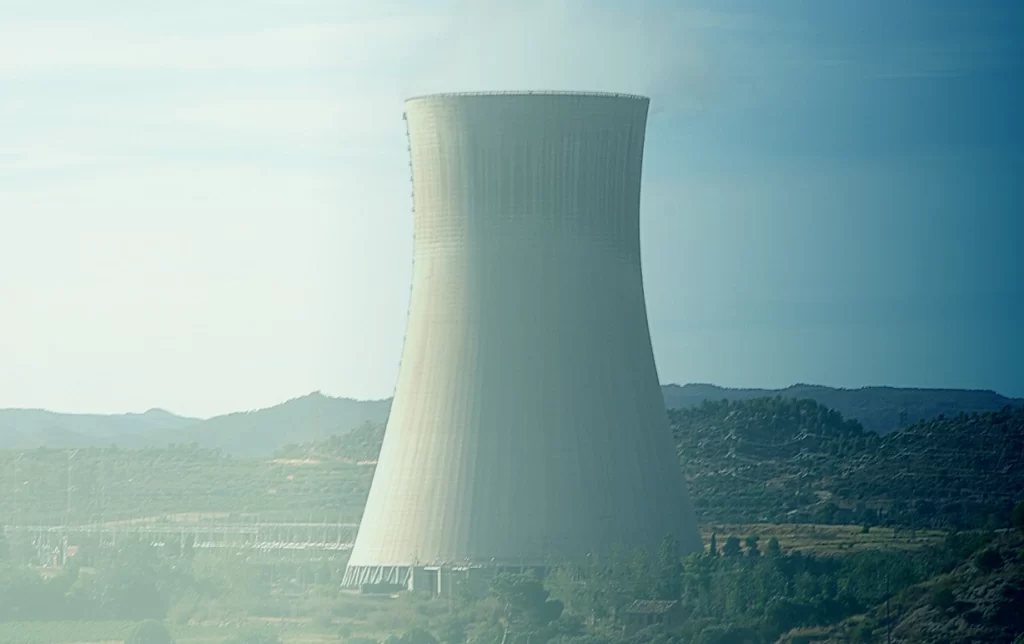
Utility-scale treatment without civil-heavy timelines
Kalabas occupies a unique position between traditional utility-scale civil plants and small package systems. Individual modules deliver up to 16 megalitres, and multiple units can be combined to exceed 100 MLD, suitable for large power generation facilities.
16 MLD
Per module output
100+ MLD
Multi-module maximum
~10 mo
Deployment timeline
This modular approach allows power projects to deploy treatment capacity without committing to multi-year civil construction programmes — compressing overall project timelines and enabling earlier electricity generation and revenue.
Protecting high-value generation assets
By achieving 98 - 99% NTU removal efficiency, Kalabas protects heat exchangers, cooling towers, boilers, and turbines from fouling, corrosion, and scaling. Improved water quality extends equipment lifespan, reduces maintenance frequency, and improves overall thermal efficiency.
Cooling towers
Reduced scaling and biological fouling — lower blowdown frequency and improved thermal performance.
Heat exchangers
Cleaner water extends service intervals and prevents efficiency losses from deposits and corrosion.
Boilers and turbines
Consistent feedwater quality protects internal surfaces, reducing unplanned maintenance and outage risk.
Emissions control
Stable water quality supports scrubber and flue gas desulphurisation system performance.
"Improved water quality translates directly into improved generation reliability and lower lifecycle cost."
Energy-efficient treatment for energy-constrained systems
For large-volume power applications, the energy cost of water treatment itself is a meaningful variable. Kalabas consumes less than 50 kW per megalitre — significantly lower than conventional treatment solutions.
Conventional treatment
100–150 kW
Per megalitre processed, a material auxiliary load on generation output.
Kalabas
<50 kW
Per megalitre, materially improving overall plant efficiency and reducing auxiliary load.
The system is designed to operate under energy instability and auxiliary power scenarios — supporting resilience during grid disruptions.
Continuous operation for base-load generation
Power generation cannot pause for water treatment maintenance. Kalabas uses continuous moving-bed sand filtration with automated backwashing that occurs without downtime. Each module operates independently, ensuring redundancy and eliminating single points of failure for uninterrupted cooling water supply.
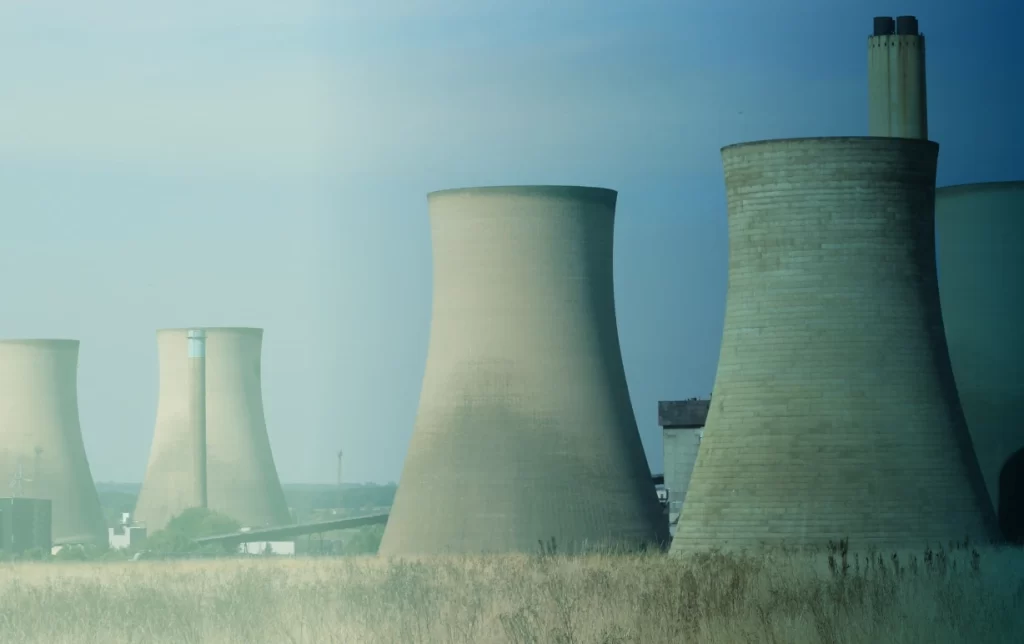
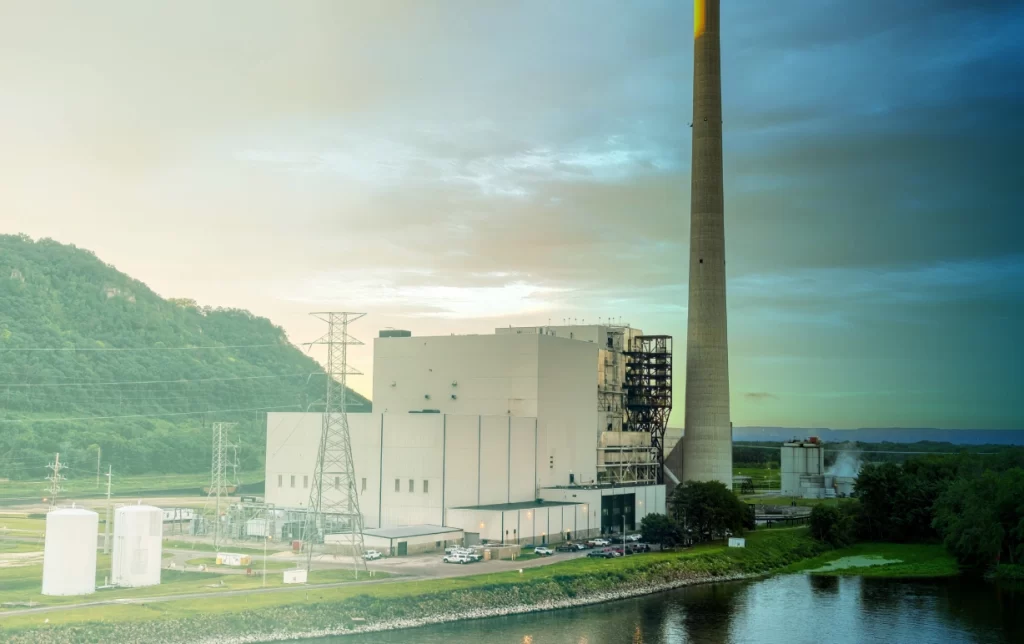
Enabling water reuse and zero liquid discharge
Water scarcity increasingly drives power plants toward reuse and closed-loop cooling systems. Kalabas's low water loss, consistent output, and ability to handle variable return streams support zero liquid discharge and water reuse strategies.
Water reuse and environmental compliance
- Reduces freshwater abstraction from stressed river and reservoir sources
- Supports environmental permits and water use licence conditions
- Strengthens long-term water security at constrained sites
- Enables zero liquid discharge strategies in water-scarce regions
Compact footprint for constrained sites
Kalabas uses approximately one-third of the space required by traditional treatment works. This enables upgrades at existing power stations without extensive land acquisition and supports deployment on constrained sites, including brownfield stations where space for expansion is limited.