DATA CENTRES
Making water as reliable aspower and connectivity.
For data centres, water is mission-critical infrastructure. Cooling systems depend on continuous, predictable water supply — and even brief interruptions can threaten uptime commitments measured in five nines.
As hyperscale and edge facilities expand across Africa, water availability and quality are becoming strategic determinants of where and how digital infrastructure can grow. Kalabas gives data centre operators control over water — matching the speed, resilience, and scalability expected of modern cloud infrastructure.
24/7 operation
Continuous filtration and modular redundancy protect cooling availability.
Fast deployment
Water infrastructure delivered on data centre build timelines.
Scale as compute scales
Modular expansion aligned with server and cooling growth.
Better PUE
Protects cooling systems and improves energy efficiency.
Small footprint
Utility-scale treatment without consuming valuable site space.
Low water loss
Efficient treatment supporting water stewardship and ESG targets.
The water risk in a high-availability industry
Data centres consume large volumes of cooling water and operate with near-zero tolerance for disruption. Variable municipal supply, climate-driven water stress, and long infrastructure lead times create risk in an industry built on availability guarantees.
The availability gap
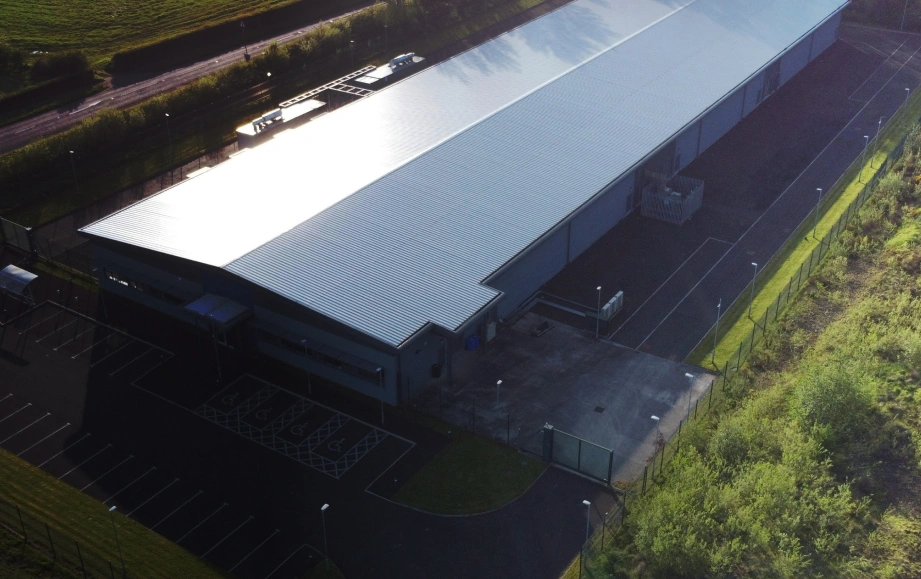
Facilities are often located in urban or peri-urban areas where space is constrained and land costs are high. At the same time, demand for compute capacity is accelerating — driven by cloud adoption, AI workloads, and edge computing — leaving little room for slow, civil-heavy water solutions.
Mission-critical reliability, by design
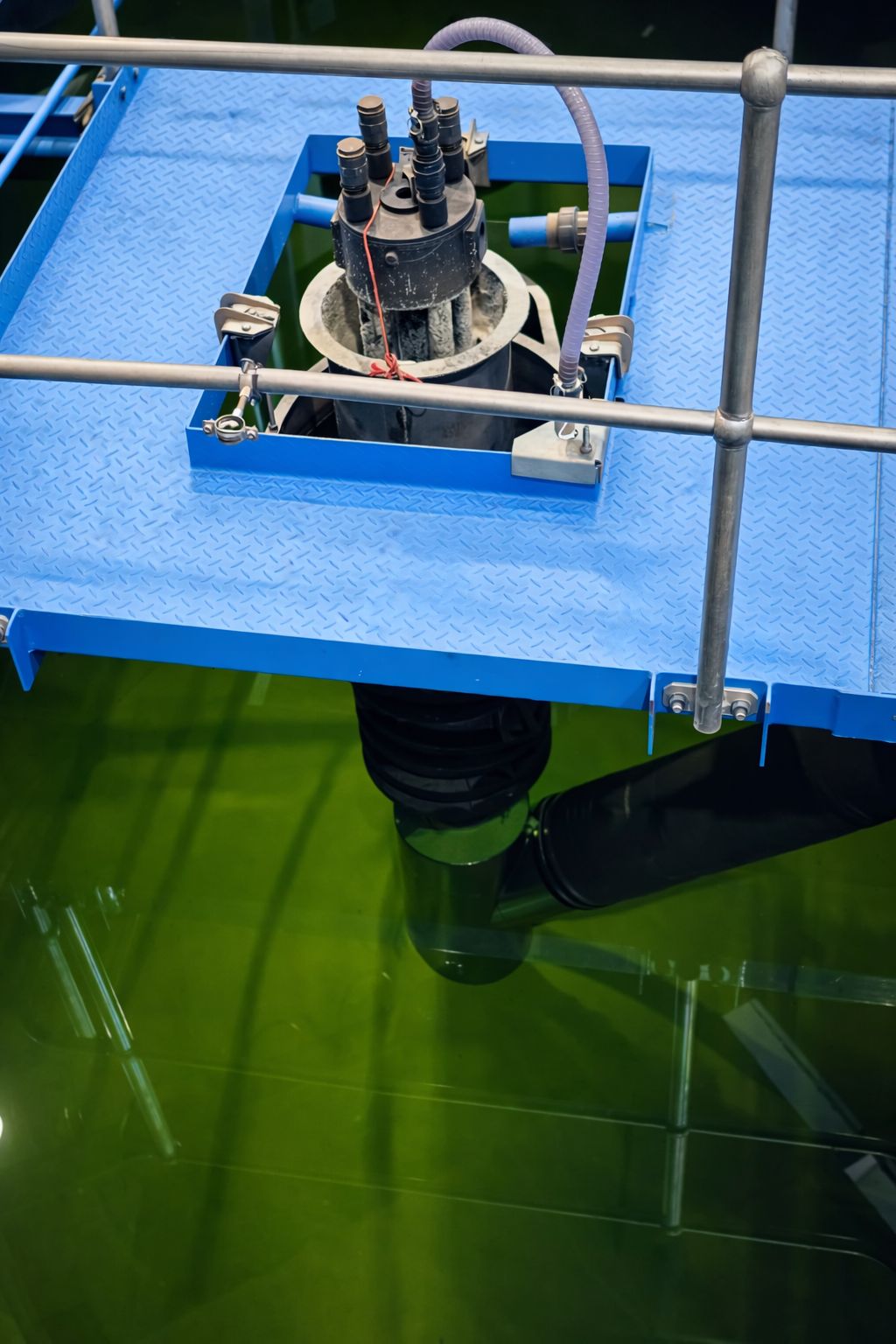
Kalabas uses continuous moving-bed sand filtration with automated backwashing that occurs without interrupting supply. Each module operates independently — providing inherent N+1 redundancy and eliminating single points of failure.
N+1
Built-in redundancy — independent module operation
24/7
Continuous supply — no backwash downtime
Zero
Single points of failure in the treatment train
"This architecture aligns with data centre reliability models — ensuring cooling water remains available even during maintenance or unexpected events."
Deployment speed that matches digital build cycles
Conventional water treatment plants take years to design and commission — timelines incompatible with data centre development. Kalabas can be deployed in roughly ten months, allowing water infrastructure to keep pace with fast-moving build schedules.
~10 mo
Contract to operation
2–4 yr
Conventional equivalent
~⅓
Footprint vs conventional
This speed helps operators bring capacity online sooner and respond rapidly to growing demand for compute and storage — particularly in markets where hyperscale build programmes are accelerating.
Scalable water capacity for hyperscale growth
Data centre water demand grows with server density and cooling load. Kalabas's modular architecture allows capacity to be added incrementally as facilities expand — without overbuilding upfront.
Edge / single hall
0.1–2 MLD
Right-sized for edge or single data hall deployment with minimal footprint.
Mid-scale campus
2–20 MLD
Multi-hall facilities with phased expansion as compute density increases.
Hyperscale
20–100+ MLD
Full campus-scale capacity through parallel module deployment.
Protecting cooling infrastructure and improving PUE
Water quality directly affects chiller performance, cooling tower efficiency, and maintenance cycles. Kalabas achieves 98–99% NTU removal efficiency, protecting cooling equipment from fouling, scaling, and premature failure.
Cooling towers
Reduced scaling and fouling — lower blowdown frequency and improved thermal performance.
Chillers and heat exchangers
Consistent water quality extends service intervals and prevents efficiency losses.
Adiabatic cooling systems
High-quality input water protects pads and nozzles from blockage and contamination.
PUE improvement
Stable thermal performance and reduced maintenance contribute directly to better Power Usage Effectiveness.

Water reuse and sustainability at scaleWater reuse and sustainability at scale
Hyperscale operators face increasing pressure to reduce water footprint and demonstrate responsible stewardship. Kalabas's low water loss supports closed-loop cooling and reuse strategies — reducing freshwater intake and supporting water-positive commitments.
Sustainability and ESG alignment
- Less than 5% water loss — maximises reuse in closed-loop cooling systems
- Lower energy and chemical consumption reduces operational carbon footprint
- Supports water-positive commitments and corporate sustainability reporting
- Enables greater siting flexibility — including water-stressed or infrastructure-constrained regions
Automated operation aligned with data centre philosophy
Kalabas is fully automated and can integrate with building management and monitoring systems. Remote monitoring, predictive maintenance, and minimal manual intervention align with the operational models of modern data centres.
Local 24/7 support ensures rapid response without reliance on offshore service centres — a critical advantage for facilities that cannot wait for international support escalations.