
CONTRACTORS
Turning complex builds into defined installations.
Contractors operate where plans meet reality. Delivery is measured in days on site, crews coordinated, materials arriving on time, and milestones met under contractual pressure. Penalties are real, margins are tight, and uncertainty compounds quickly once construction begins. Kalabas was developed to reduce that uncertainty — reshaping how potable water infrastructure is built by shifting complexity out of the site and into controlled, factory-built systems.
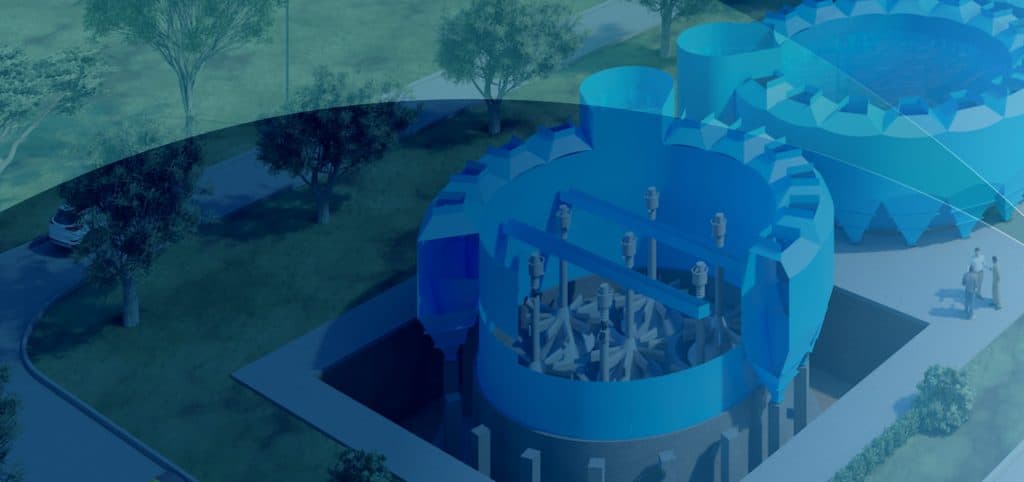
Reduced civil scope
Up to 50% smaller footprint than conventional plants, significantly reducing civils, earthworks, and construction duration.
Defined delivery window
Approximately 10 months from contract to full operation, compared to 4–6 years for traditional civil-heavy construction.
Simplified construction sequence
Fewer structures, fewer interconnections, and fewer opportunities for delay or rework.
Automated modular operation
Independent modules and full automation simplify commissioning and reduce post-construction obligations.
The delivery environment
Traditional water treatment plants are civil-intensive by nature. Large footprints, multiple structures, extended sequencing, and long lead times turn projects into multi-year construction exercises. Every additional interface — between trades, suppliers, approvals, and weather windows — introduces risk.Traditional water treatment plants are civil-intensive by nature. Large footprints, multiple structures, extended sequencing, and long lead times turn projects into multi-year construction exercises. Every additional interface — between trades, suppliers, approvals, and weather windows — introduces risk.
How delays compound
Delays are rarely caused by a single failure. They accumulate through scope changes, revised designs, late equipment deliveries, labour constraints, and coordination issues across multiple subcontractors. Once timelines slip, costs escalate and cash flow suffers.
Reducing on-site construction
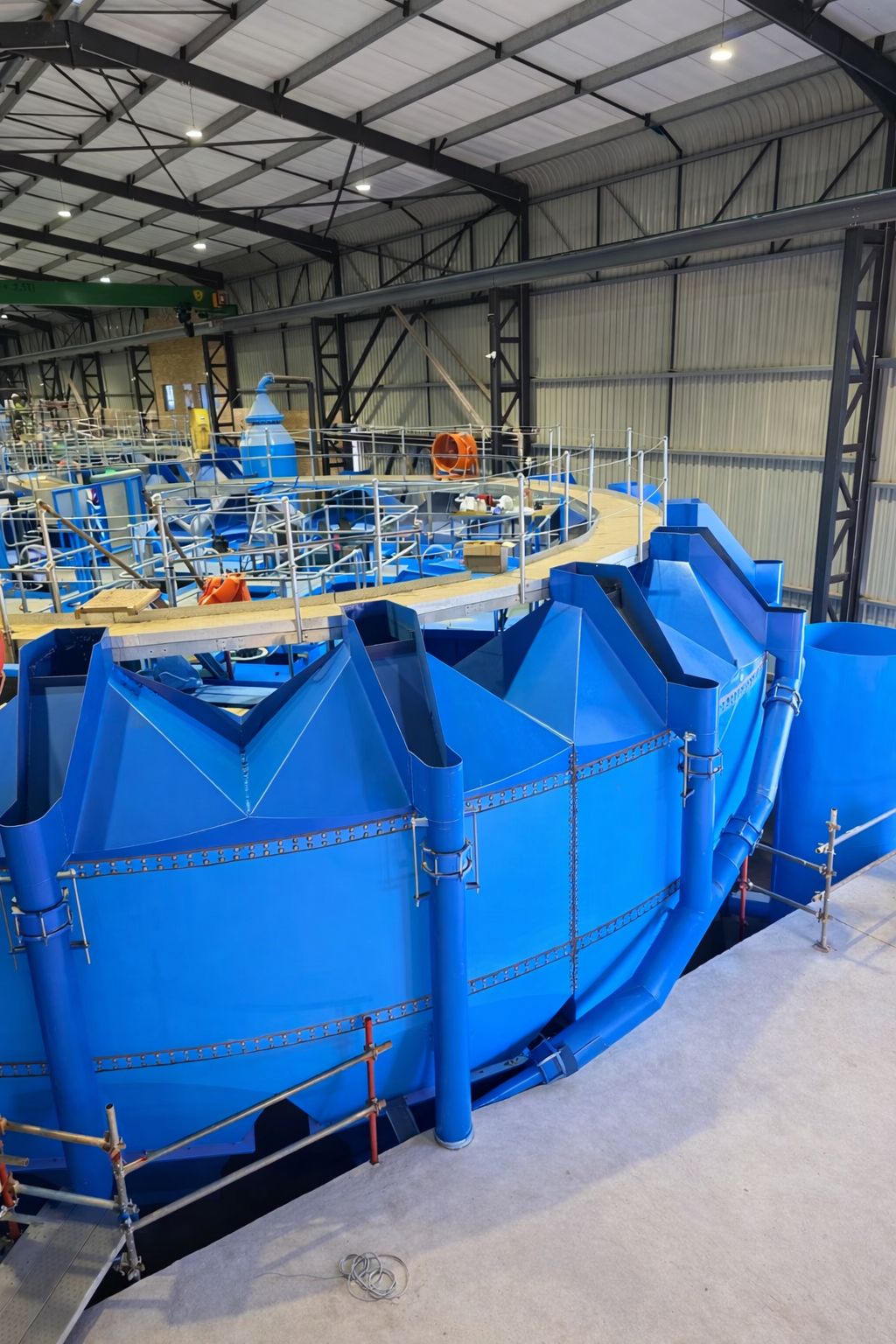
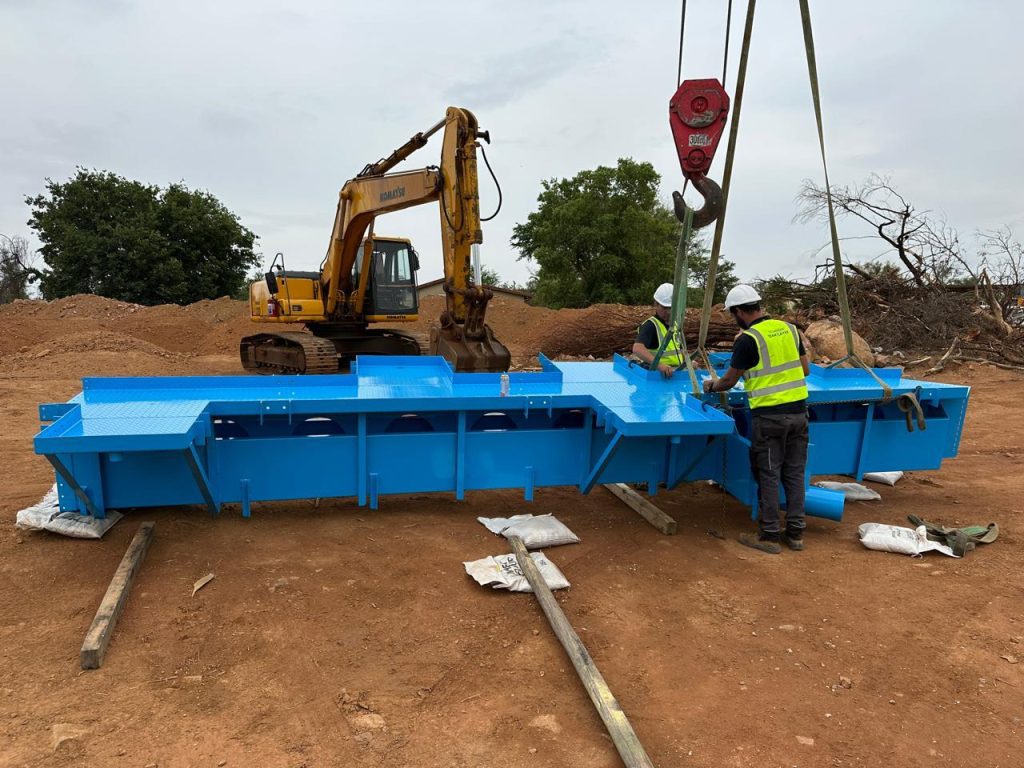
Instead of constructing multiple standalone treatment structures on site, Kalabas arrives as pre-engineered, factory-built modules that are partially assembled before delivery. This dramatically reduces the amount of civil work, formwork, and structural construction required on site.
The result is a smaller footprint, simpler foundations, and far less time exposed to site conditions, labour availability, and weather risk.
Compressing timelines without compressing quality
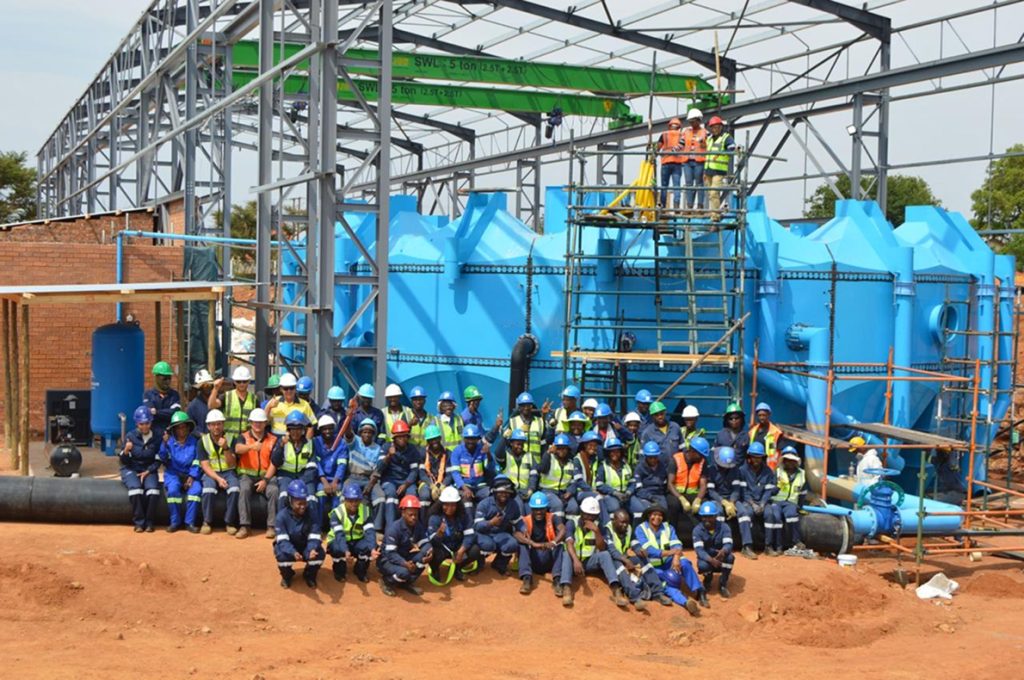
Where traditional plants often take two to three years to construct, Kalabas supports parallel delivery. While site preparation is underway, modules are fabricated off-site. Installation becomes a defined sequence rather than an open-ended build.
March 2023
Contract signed — Hammanskraal emergency intervention
Oct / Nov 2023
First water produced — within 7–8 months of contract award
January 2024
Full 50 MLD capacity operational
Conventional equivalent
4–6 years from contract to operation
"That level of certainty materially changes how contractors plan resources, billing, and cash flow."
Fewer interfaces, fewer delays
Kalabas eliminates the need to build and interconnect multiple treatment structures — flocculation chambers, sedimentation tanks, and ancillary works. With fewer structures come fewer interfaces, fewer handovers, and fewer opportunities for misalignment between trades.
The system is standardised and pre-engineered, which means approval cycles are simplified and quality control is more consistent than site-built solutions.
1
Structure vs 4–5 conventional
50%
Smaller footprint
~10 mo
Contract to operation
Lower exposure to labour and weather risk
By shifting much of the construction effort off-site, Kalabas reduces dependency on large on-site crews and specialist subcontractors. This is particularly valuable in remote or rural locations where skills availability and logistics can derail schedules.
Factory fabrication also minimises weather-related delays, allowing site work to proceed with greater predictability.
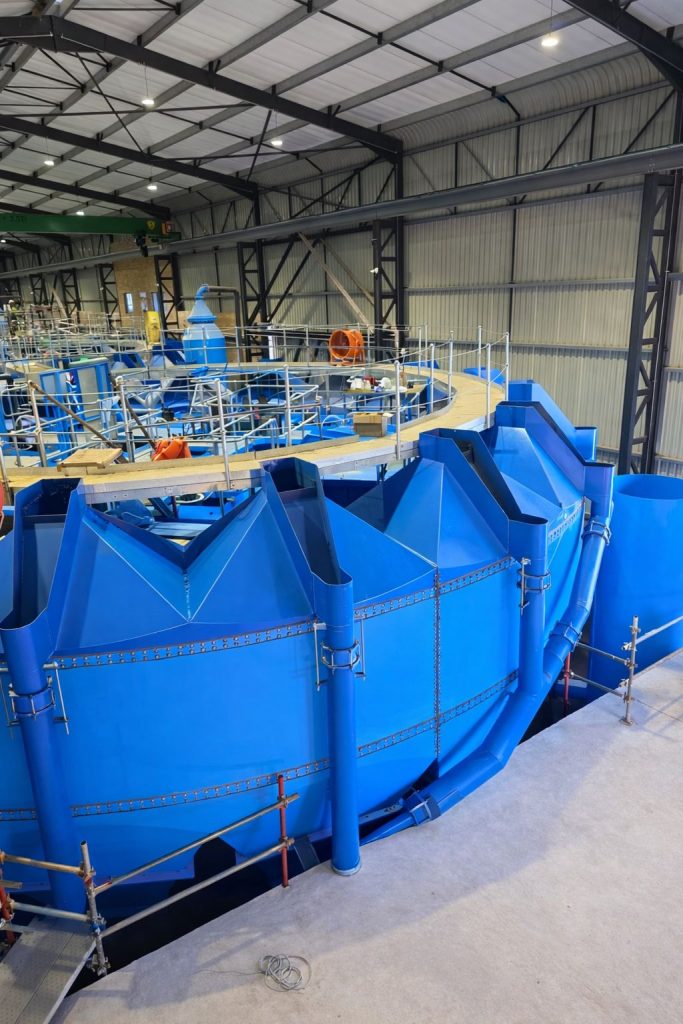
Installation certainty and operational simplicity
Once installed, Kalabas operates as a fully automated plant. This reduces commissioning complexity and removes the need for extended on-site operational support from contractors, supporting a cleaner handover and clearer project closure.
"Each module operates independently — if one unit requires attention, others continue operating, reducing the risk of full-system downtime during commissioning or early operation."