
AGRICULTURE
Securing water qualitywhere yields depend on it
Kalabas gives agricultural producers control over water at the point of use — treating it where it's extracted, so crops, livestock, and exports are never constrained by what comes out of the ground.
Crop yields, livestock health, food safety, and export certification all depend on reliable access to clean, consistent water. Increasing climate volatility has only intensified the challenge, making freshwater availability less predictable and water quality more variable.
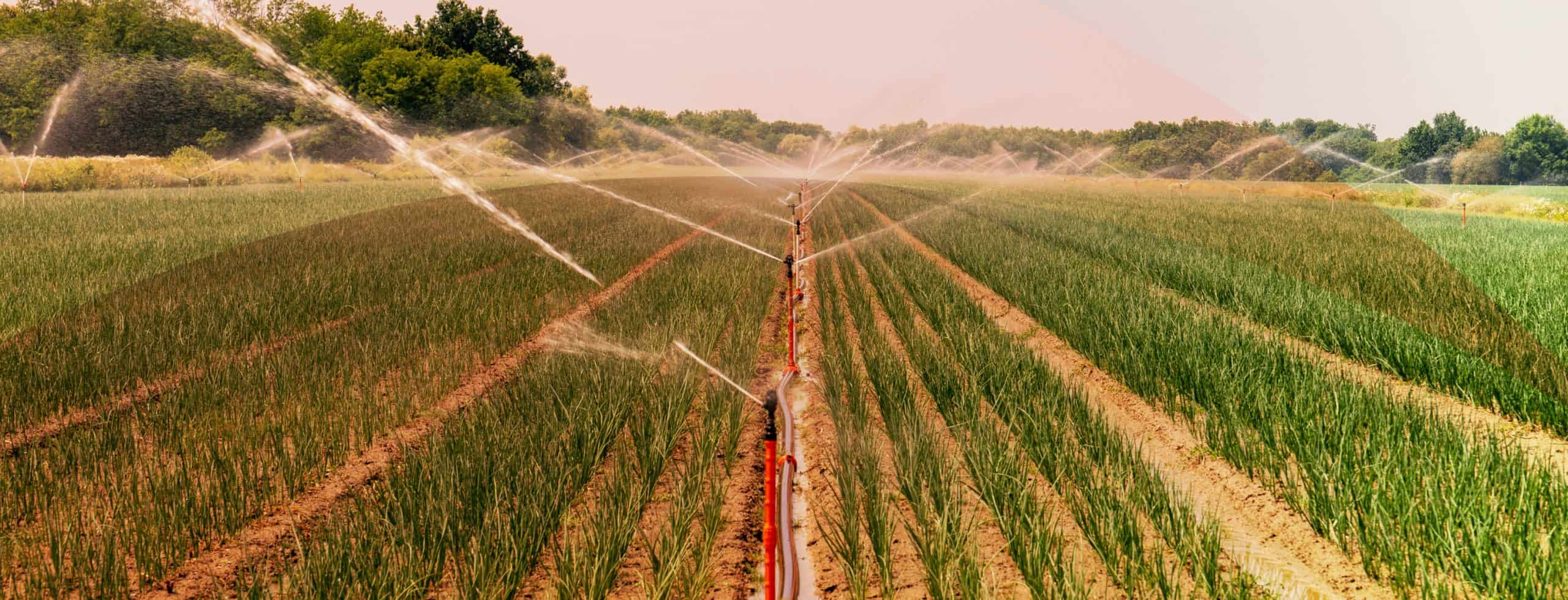
Source-based treatment
Treat water where it is extracted, avoiding long pipelines and centralised infrastructure.
Consistent output under fluctuation
Maintains water quality despite extreme seasonal variability.
Scale to the farm, not the grid
Modular capacity matched to real agricultural demand.
Aligned to production cycles
Deployment timelines compatible with planting and harvest schedules.
Operating within constrained water realities
Most farms depend on boreholes, rivers, dams, and run-off sources that fluctuate dramatically in quality throughout the year. During rainy seasons, turbidity and contamination can increase by orders of magnitude; during dry periods, scarcity becomes the dominant risk.
The core constraint
For small to medium producers, water often becomes the single biggest constraint on planting decisions, stocking levels, and long-term viability — not because it doesn't exist, but because it can't be reliably treated where it's needed.
Traditional centralised treatment infrastructure is rarely viable for dispersed farms, while conventional plants struggle to scale with seasonal demand.
Treating water at the source
Rather than investing in long reticulation networks, Kalabas works at the point of extraction. Water is treated where it is drawn — from rivers, dams, or boreholes — eliminating the cost and complexity of transporting untreated water over long distances.
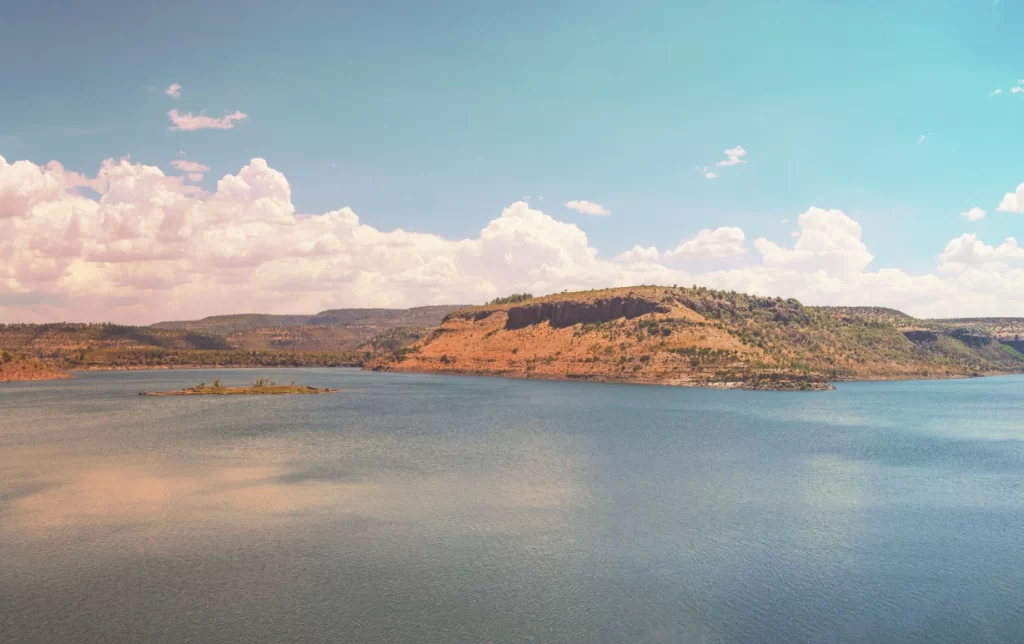
Integrated grit and silt removal enables direct feed from variable agricultural sources without extensive pre-treatment infrastructure.
Built for extreme variability
Agricultural water quality is rarely stable. Kalabas is designed to maintain consistent performance even when source water deteriorates sharply.
>400 NTU
Turbidity handled
1 000%
Quality swing absorbed
98–99%
NTU removal efficiency
"It's a level of stability that protects crops and livestock during precisely the periods when water quality typically fails."
Right-sized systems for distributed farms
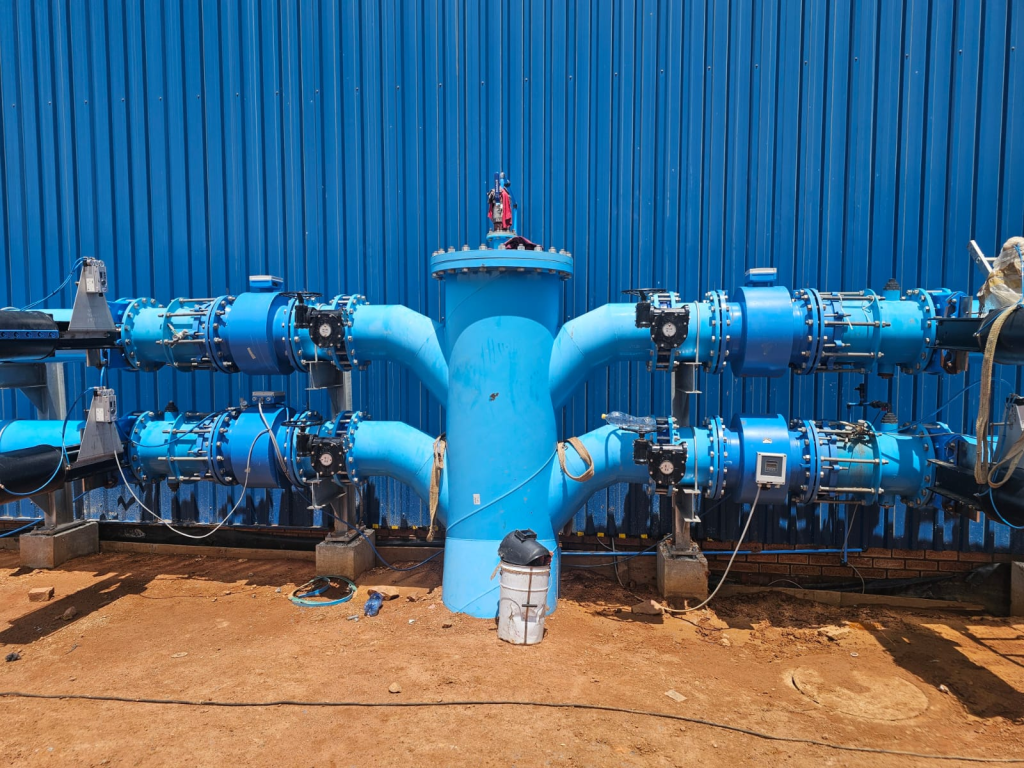
Kalabas's modular architecture starts at 0.1 MLD, making it viable for individual farms, cooperatives, or agricultural clusters. Systems can be sized to actual irrigation and livestock requirements rather than oversized for theoretical peak demand.
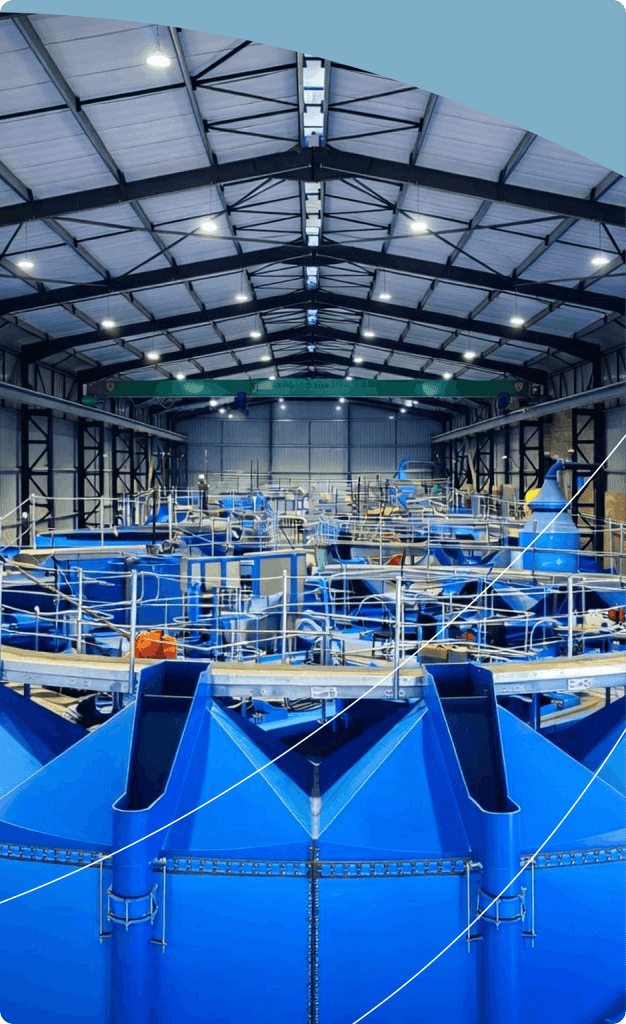
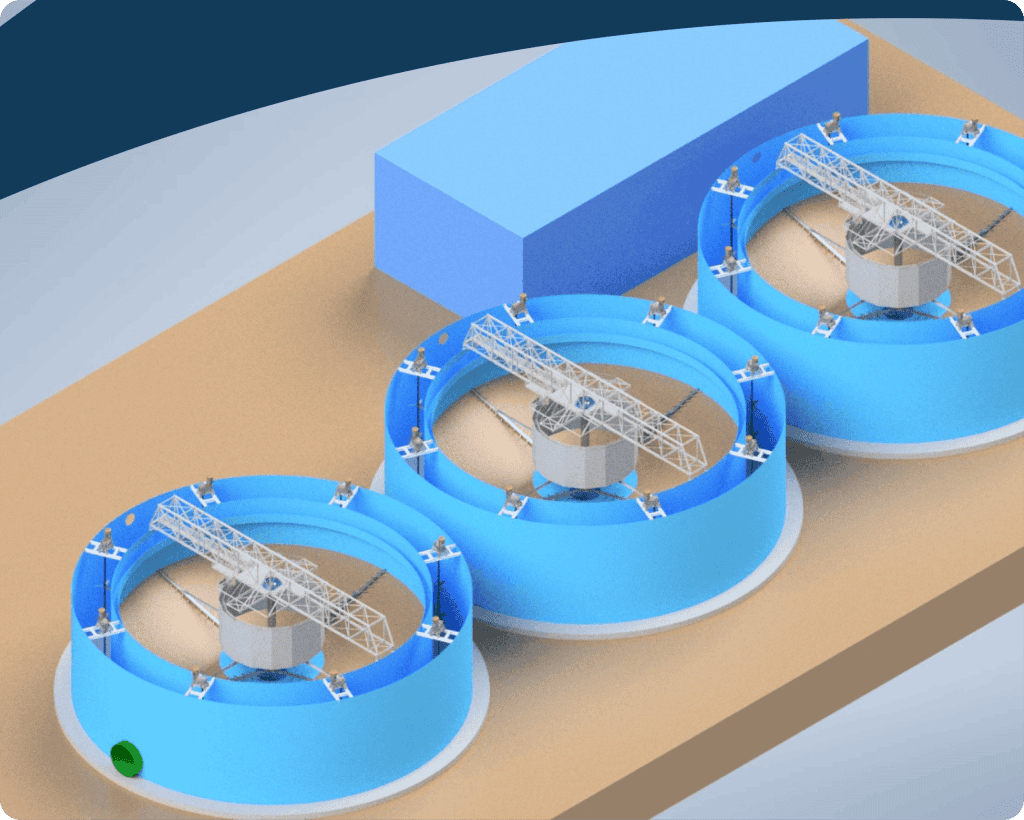
As operations expand or crop mix changes, additional modules can be added incrementally without redesign or major civil works.
Speed that aligns with growing seasons
Agriculture operates on biological timelines. Missing a growing season due to water delays can erase an entire year's value. Kalabas can be deployed in roughly ten months, letting producers secure water capacity ahead of critical planting and production windows.
~10 mo
Contract to first water
4–6 yr
Conventional equivalent
Factory-built modules reduce on-site construction complexity, enabling faster readiness even in remote rural areas.
Cost efficiency for agricultural margins
Kalabas is designed to operate within agricultural budget realities. Lower energy and chemical consumption reduce operating costs, while less than 5% water loss maximises irrigation availability. Its compact footprint — approximately one-third that of traditional plants — reduces land taken out of production.
<50 kW
Energy per ML
~50%
Less coagulant
<5%
Water loss
⅓
Land footprint
Operational simplicity in rural environments
Many farms operate far from technical support and specialist skills. Kalabas's fully automated operation, reduced equipment count, and simplified maintenance requirements minimise day-to-day management burden. Local 24/7 support ensures assistance is available when needed, without reliance on offshore service centres.
Supporting reuse and sustainable farming
As freshwater sources become increasingly stressed, water reuse is no longer optional. Kalabas supports treatment and reuse of agricultural run-off, improving the economics of closed-loop systems and reducing abstraction from rivers and aquifers — strengthening long-term water security while supporting sustainability and ESG commitments across the agricultural value chain.
Enabling higher-value agriculture
Consistent, high-quality water enables producers to move into higher-value crops and production systems, including protected agriculture, greenhouses, and hydroponics. It also supports compliance with export standards where water quality is directly linked to market access.
"Ultimately, reliable water becomes a growth enabler rather than a limiting factor."