
MINING
Securing water as aproduction-critical asset.
Water isn't a supporting utility in mining — it's a production input as critical as energy, labour, and ore quality. Processing, dust suppression, cooling, and mineral separation all depend on reliable water supply in remote locations where municipal systems are unreliable or unavailable.
Kalabas gives mining operations control over water availability, cost, and performance — securing reliable, scalable water capacity that grows with production, supports reuse strategies, and reduces operating risk.
High-turbidity tolerance
Maintains performance at >400 NTU, even under heavy sediment and process water conditions.
No interruption to supply
Continuous filtration and modular redundancy support uninterrupted mining operations.
Fast time to operation
Months to deployment, supporting mine development and expansion schedules.
Grow as the mine grows
Incremental capacity expansion aligned with production phases.
Low energy intensity
<50 kW per ML significantly lowers long-term operating costs.
Designed for real operating reality, not ideal water inputs
Mining operations frequently rely on challenging water sources — stormwater, high-sediment surface water, process return streams, and increasingly scarce freshwater supplies. Water quality varies widely across operations and seasons, while regulatory scrutiny around discharge, reuse, and environmental impact continues to intensify.
The margin pressure
Long lead times for conventional water treatment plants expose operations to unnecessary risk, while high energy and chemical consumption erode margins over the life of the mine. Infrastructure delays can stall expansion and disrupt production schedules.
Handling highly variable and contaminated water
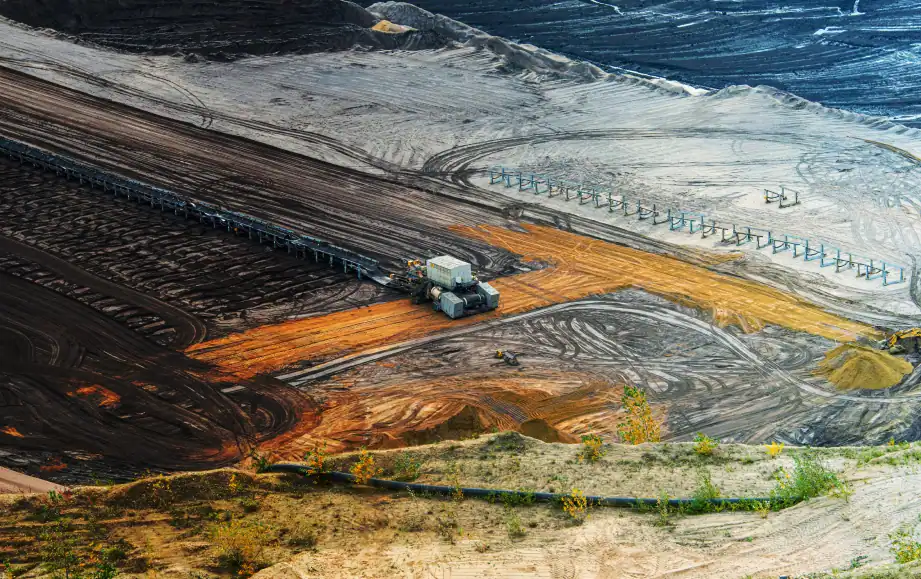
Mining water is rarely clean. High turbidity, suspended solids, and sediment loads are common, and in some contexts process return streams introduce additional treatment complexity.
Stormwater
High-sediment surface water
Process return streams
Variable raw water sources
Borehole water
>400 NTU
Turbidity handled
98–99%
NTU removal efficiency
<5%
Water loss
Integrated grit and silt removal eliminates the need for extensive pre-treatment infrastructure, while 98–99% NTU removal efficiency delivers consistent clarity even under heavy sediment loads — treating stormwater, process return streams, and variable raw water within a single system.
Continuous operation for production environments
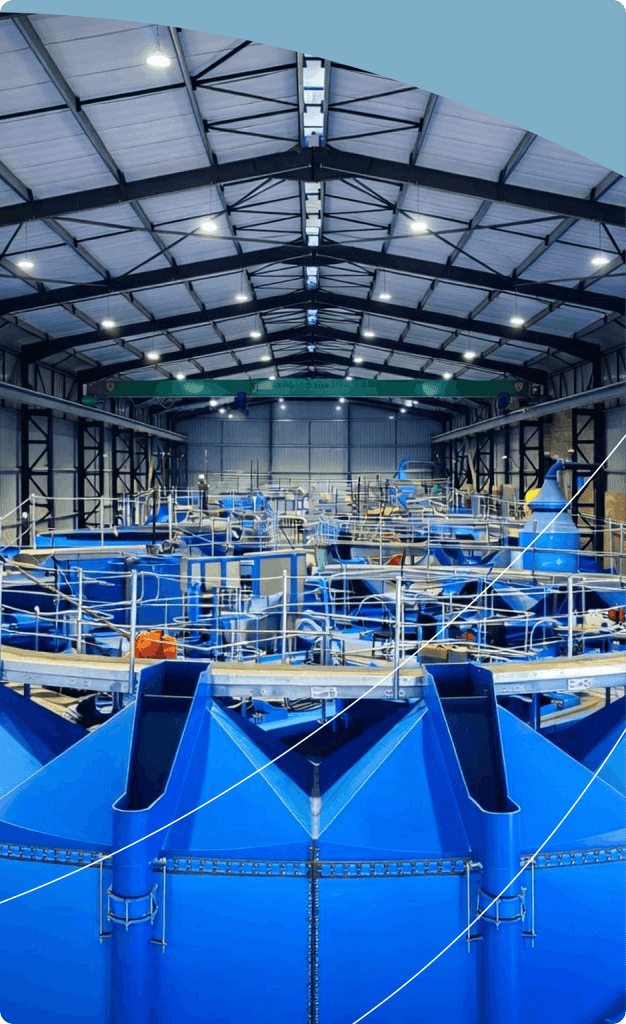
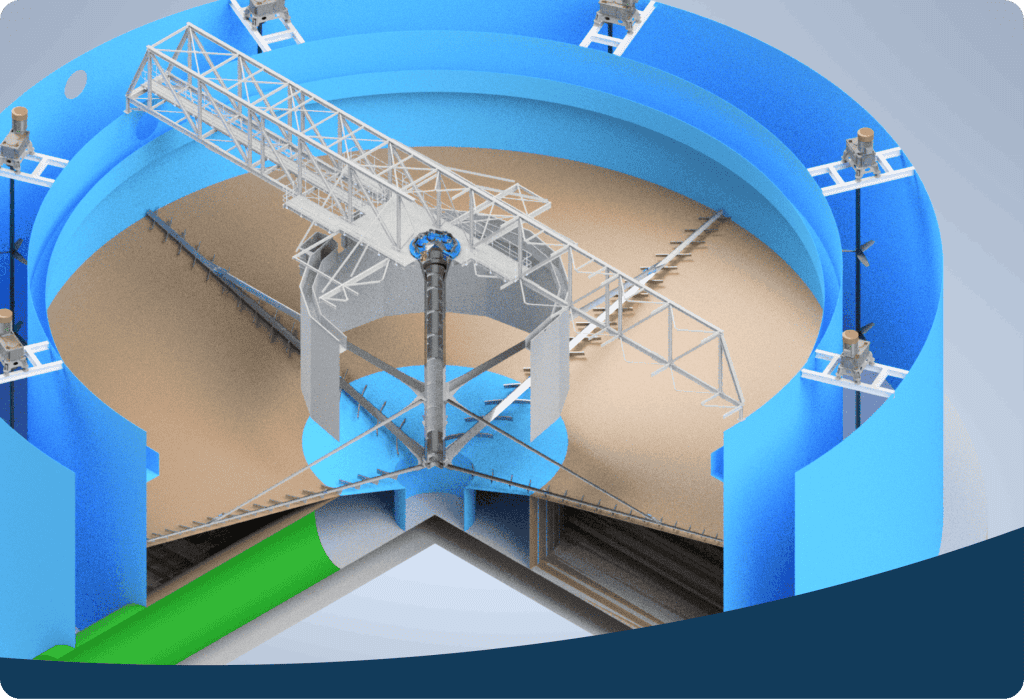
When operations cannot afford water supply interruptions, Kalabas uses continuous moving-bed sand filtration with automated backwashing that occurs without downtime. Each module operates independently — maintenance on one unit does not interrupt overall supply.
"Less than 5% water loss and maximum recovery — critical for both production continuity and reuse economics."
Scaling water capacity with production
Mining water demand changes over the life of a mine. Kalabas's modular architecture allows capacity to scale from 0.1 MLD to over 100 MLD, aligning treatment capacity with actual production requirements rather than overbuilding upfront.
Exploration phase
0.1–1 MLD
Minimal footprint, rapid deployment — water secured without overcommitting capital.
Production ramp-up
1–20 MLD
Add modules in parallel as throughput increases — no redesign required.
Full production
20–100+ MLD
Utility-scale capacity across multiple areas of the operation or decentralised across the site.
Lower energy and operating cost exposure
Kalabas consumes less than 50 kW per megalitre — dramatically reducing energy costs compared to conventional treatment solutions. Lower chemical usage and fewer mechanical components further reduce operating expenditure.
<50 kW
Energy per ML
~50%
Less coagulant
~75%
Fewer equipment parts
For mines operating under margin pressure, these efficiencies compound over time — particularly where water reuse and closed-loop systems are prioritised.
Supporting water reuse and ESG commitments
Water scarcity increasingly forces mines to maximise reuse and minimise discharge. Kalabas's low water loss, consistent treatment performance, and ability to handle variable return streams make closed-loop water systems more economically viable.
ESG and licence-to-operate
- Supports environmental compliance through reduced freshwater abstraction
- Minimises discharge volumes — reducing regulatory exposure
- Strengthens ESG performance reporting with measurable water metrics
- Acid mine water treatment applications currently under development
Rapid deployment in remote locations
Traditional water infrastructure often takes four to six years to deliver — out of step with mine development or expansion schedules. Kalabas can be deployed in roughly ten months, with factory-built modular units reducing on-site construction complexity and reliance on local contractor availability.
Simplified operation in skills-constrained environments
Remote mining sites often face shortages of skilled operators. Kalabas's fully automated operation and reduced equipment complexity minimise manual intervention and maintenance burden. With 24/7/365 local support, mines are not dependent on offshore service centres when issues arise.
"Water becomes a controlled operational input — not a source of unplanned downtime and escalating cost."