
Our story
In response to the Hammanskraal water crisis, Kalabas was developed to solve what traditional infrastructure could not—delivering safe water through a faster, more reliable approach.
Lets TalkThe Kalabas story: Necessity is the mother invention
In 2023, Hammanskraal in the Gauteng province became a national flashpoint when decades of failing infrastructure and unsafe water culminated in a fatal cholera outbreak. There were public outcries and political pressure, but fixing a collapsing municipal system is not simple and there were additional challenges.Government was confronted with a near-impossible combination of constraints:
- A community experiencing a deadly cholera outbreak
- Water sources contaminated with sewage and algae
- Turbidity levels spiking far beyond design tolerances.
The existing infrastructure was failing, municipal systems could not cope, and any traditional upgrade would take more than six years, far too slow for a crisis where every day meant further illness and unrest.

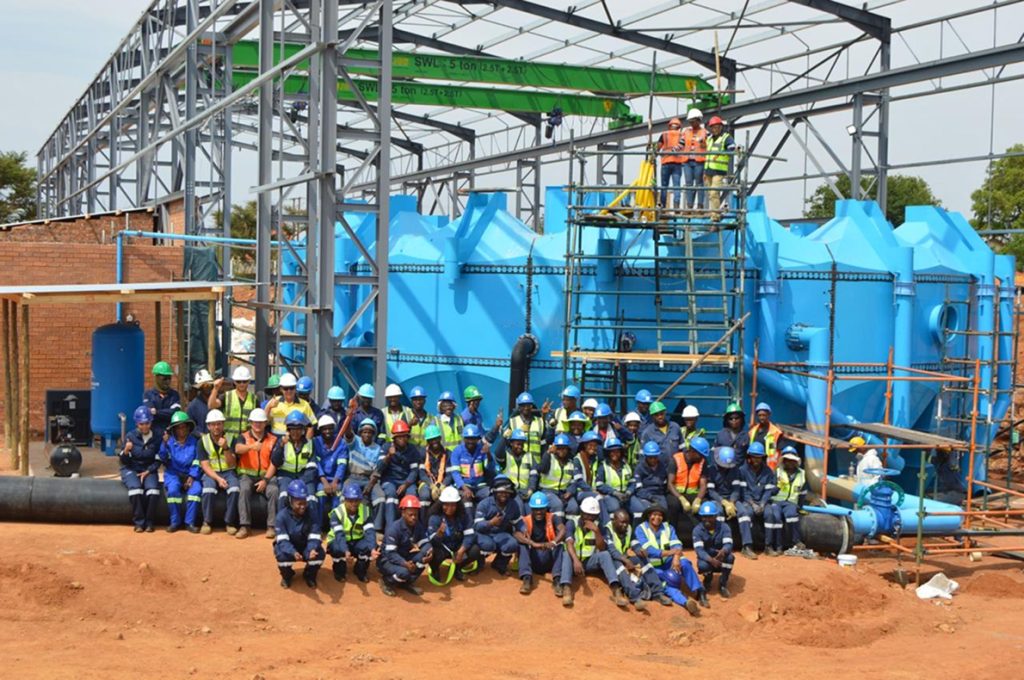
Collaborating to solve a critical crisis
To address this, in 2024, the Hammanskraal Emergency Water Treatment Project was launched as a collaboration between Magalies Water Board, Pro-Plan Consulting Engineers, the Department of Water and Sanitation, City of Tshwane, and National Government.
A 50 MLD modular water treatment solution was approved, and Pro-Plan Consulting Engineers appointed Tecroveer to deliver a modular package treatment system as an emergency measure.
Due to the strategic potential of the Klipdrift Water Treatment Plant under Magalies Water, the site was selected for the rapid delivery of potable water.
Traditionally there are two options when it comes to water treatment. If you want fast, you can instal packaged plants, which are off the shelf and can be installed in under a year. However, they can only deliver around 5 megalitres per unit and cannot adapt when water conditions change.
This is not typically a utility-grade solution. 10 of these would have been required to meet the 50 MLD requirement. But Hammanskraal couldn’t afford to wait 4 – 6 years for a traditional plant. There was no option that let Tecroveer deliver utility-scale capacity, at speed, with the flexibility to handle varying water qualities, and the performance of a traditional plant, without the time and cost burdens that had become accepted as normal.
So, we took an entirely different route
We built for the water we had.
The Tecroveer team analysed the water we were dealing with, determined the precise treatment modules required, and then packaged those processes into a customised, modular solution built specifically for that environment.
This was possible because instead of constructing seven different systems, Kalabas delivers 7 treatment steps in a single modular package unit.
What began as an emergency intervention became a breakthrough.
This was possible because instead of constructing seven different systems, Kalabas delivers 7 treatment steps in a single modular package unit.
What began as an emergency intervention became a breakthrough.
Kalabas delivered
Met all performance requirements

Handled highly variable, contaminated water
Operated at a fraction of the energy and chemical input
Has a radically smaller footprint than traditional plants


The “temporary” solution outperformed the infrastructure it was meant to support
• First 12.5 MLD unit delivered within 10 months of tender
• Zero lost time due to unrest and construction mafia threats
• Delivered on budget
• Excellent safety record
• Active community involvement
• Rebuilding trust in service delivery
• Restoring dignity and constitutional rights
Rethinking water
The Hammanskraal intervention delivered more than clean water; it demonstrated how Rethinking Water can address systemic weaknesses.
Rethinking speed, scale, and delivery
Utility-scale water can be delivered faster, smaller, and more cost-effectively.
The Hammanskraal deployment proved that municipal-scale water treatment can be delivered with the speed, footprint, and cost profile of a package plant, while retaining the robustness and output of a conventional facility.
Rethinking project vs product
Water treatment does not have to be reinvented for every site.
water treatment as a configurable product rather than a once-off project. This enables repeatable, utility-scale deployment without redesigning infrastructure for every site.
Rethinking De-centralisation
Capacity can be added without replacing existing infrastructure.
Decentralised modular nodes can operate alongside existing infrastructure without disruption. This lets capacity be added incrementally while reducing risk and dependency on major upgrades.
Rethinking networks
Treatment performance is inseparable from network design.
Water performance is often constrained by legacy network design, not treatment technology alone. Reconfiguring networks alongside treatment unlocks system-wide efficiency and reliability.
Rethinking governance as an enabler
Good governance can accelerate delivery without compromising standards.
The modular approach reduced footprint, energy use, and chemical demand. Visible delivery of clean water restored public trust, dignity, and community stability.
Rethinking local Rethinking local
Local engineering can compete at national scale.
The project validated the competitiveness of locally engineered water solutions at national scale. Strengthening local capability improves resilience, supply-chain stability, and long-term operability.
Rethinking environmental and social restoration
Water infrastructure can restore trust, not just supply.
The Hammanskraal deployment proved that municipal-scale water treatment can be delivered with the speed, footprint, and cost profile of a package plant, while retaining the robustness and output of a conventional facility.
Rethinking transferability and learning
Resilience is built through learning, not repetition.
Kalabas units have since informed feasibility studies across diverse geographic and operating contexts. The key insight is that resilience comes from flexibility, collaboration, and innovation, not infrastructure investment alone
Start with a better way to deliver water treatment
Tell us about your project and we’ll show you how a modular approach can simplify design, delivery, and long term operation.
Lets Talk