
USE CASE
Turning legacy infrastructure intoscalable, working systems.
Municipal water failures rarely stem from a lack of intent. They are the cumulative result of ageing plants, decades-long infrastructure backlogs, shifting raw-water quality, and population growth that outpaces design assumptions.
Across South Africa, many treatment works are operating beyond their original capacity, with limited maintenance headroom and increasing regulatory risk. Kalabas gives municipalities a practical path forward — adding capacity and improving performance without shutting existing systems down.
No plant shutdowns
Incremental capacity added in parallel — existing systems stay operational throughout.
Parallel modular upgrades
Standardised units added alongside existing plants instead of large civil expansions.
Phased financing
Capital aligned to real demand rather than speculative future forecasts.
Replicable across municipalities
Standardised units create consistency and predictability at municipal scale.
Why conventional upgrades stall
Conventional refurbishment projects are built around large, once-off interventions. They require years of engineering design and sequencing, prolonged plant shutdowns, and significant upfront capital commitments. Capacity is typically sized around projected future demand — locking municipalities into guesses that may not materialise for decades.
The familiar cycle
- Infrastructure reaches capacity — development approvals stall
- Upgrade planned — years of design and procurement begin
- Capital committed upfront for oversized future demand
- Delays compound — cost overruns, stranded assets, communities waiting
- Upgrade eventually delivers — often already behind new demand
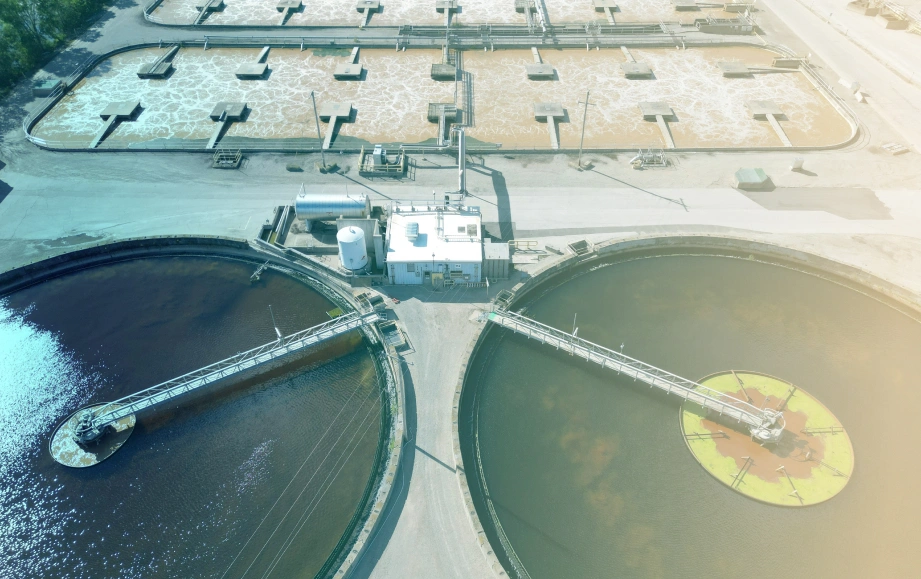
A modular approach to municipal renewal
Kalabas enables municipalities to upgrade and expand capacity without shutting down existing infrastructure. Instead of replacing plants wholesale, modular units are added in parallel — delivering immediate throughput increases while keeping legacy systems operational.
"Upgrades become a repeatable process rather than a once-in-a-generation event — making renewal predictable, affordable, and operationally manageable."
Two pressures municipalities are navigating right now
Across South Africa, the same concern is raised repeatedly at industry conferences and planning forums — development is ready to move, but water capacity is not. Two situations illustrate this pressure particularly clearly.
West Rand
Development stalled by capacity limits
Existing treatment works operating at or near capacity — no margin to approve new developments. Projects are designed, capital is available, demand exists — yet approvals cannot be issued because bulk water supply cannot be guaranteed. Conventional upgrades would take 4–6 years.
KwaZulu-Natal
Performance lost during turbidity shocks
High rainfall events drive extreme variability in raw water quality. Many conventional plants lose 30–40% of capacity under these conditions — exactly when reliability matters most. Municipalities are forced into emergency responses, tanker supply, or service restrictions.
The shared constraint
Both situations share the same underlying problem — infrastructure that cannot adapt quickly enough to a volatile, fast-changing environment. Kalabas was designed to address that gap.
Adding capacity without waiting for civil expansions
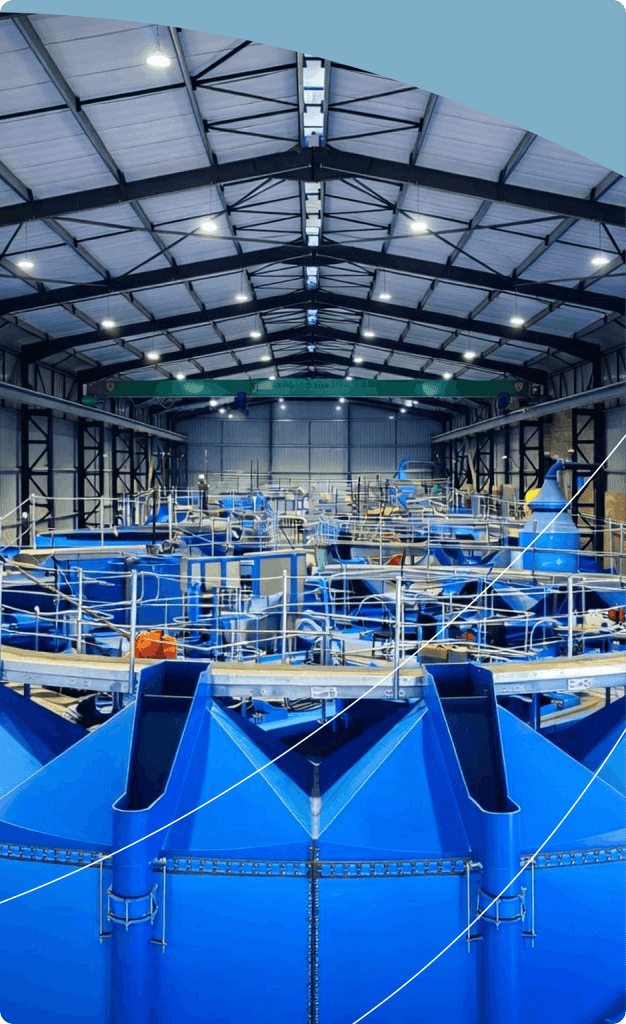
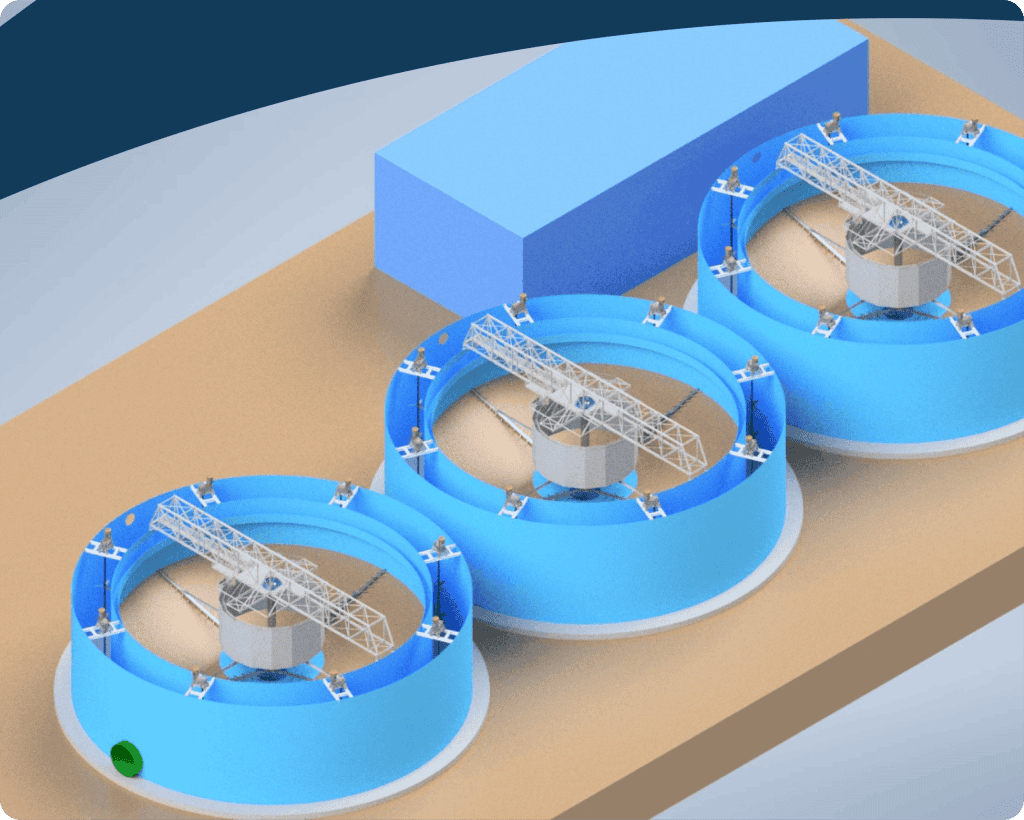
Rather than relying on once-off, large-scale refurbishments, Kalabas enables municipalities to think in terms of incremental, modular capacity. Treatment units can be added in parallel to existing plants — increasing throughput without shutting down operations or waiting years for civil expansions to complete.
~10 mo
Contract to operation
4–6 yr
Conventional equivalent
0.1–100+
MLD scalability
This creates a pathway for municipalities like those on the West Rand to add capacity in phases — aligned to real development demand — instead of delaying growth while waiting for oversized future plants.
Maintaining performance during extreme weather
In regions such as KwaZulu-Natal, Kalabas is engineered to absorb extreme raw-water variability. Integrated grit and silt handling, combined with internal process resilience, allows treatment capacity to remain stable during storm events and seasonal shifts.
Performance is maintained at turbidity levels up to 400 NTU — preventing the capacity collapse that undermines conventional plants during heavy rainfall, precisely when communities need maximum reliability.
Designed for load-shedding environments
Energy instability is treated as a design condition rather than an exception. Kalabas systems are built to continue operating under load-shedding or renewable power scenarios — reducing operational risk in municipalities where electricity supply cannot be assumed.
What municipalities, developers, and communities gain
Developers get certainty
Approved projects can proceed. Capacity can be added progressively to unlock development when it is needed — not years later.
Municipalities reduce exposure
Lower regulatory risk linked to water quality failures, reduced service interruptions, and phased capital that fits real budgets.
Communities get reliable supply
More reliable water even during extreme weather events — without waiting years for a conventional upgrade to complete.
Operating costs come down
Lower energy and chemical consumption, fewer standardised equipment components — infrastructure that is affordable to build and sustainable to operate.